Graphic: Labwor Technologies
On 26 August 2026 an email arrived giving me a temporary quota on Sunbird AI’s translation service: a thousand requests a day, ten thousand for the month, for two weeks. I remember being disproportionately happy about it. A thousand requests a day is not much of a gift by the standards of the industry. For what I was trying to do, it was the difference between a project that finishes and one that does not.
What I was trying to do was translate several thousand hymns, devotional readings and proverbs into Acholi, my first language, for three small Android apps nobody has asked me to build.
A model that speaks my grandmother’s language
Sunflower was unveiled in October 2025 by Sunbird AI, a Ugandan research group, and announced by the Ministry of ICT and National Guidance. It comes in two open-weight sizes, fourteen billion and thirty-two billion parameters, built on top of an existing open model. Sunbird’s own paper, published in October 2025, reports coverage of more than forty Ugandan languages with formal evaluation on thirty-one, and says the larger model produces the best average translation quality from local languages into English, winning on twenty-four of the thirty-one languages tested, ahead of both GPT-4o and Gemini 2.5 Pro. Acholi is among its stronger languages in both directions.
I want to sit with that for a moment, because it is not a small thing and it did not have to happen. For most of the history of language technology, Acholi was a rounding error. A speaker of Acholi typing into a translation service got something between comedy and insult. The paper includes an example where the model correctly answers a question about passports asked in Acholi and a much larger commercial system does not understand the question at all.
So the machines have arrived in my mother tongue. The reasonable next question, and the one people keep asking me in a slightly worried voice, is what that leaves for me.
What I actually do with it
The pipeline is unremarkable. Node scripts push batches at Sunbird’s hosted endpoint running the fourteen-billion model. One environment variable switches the whole thing to the same open weights running locally on my machine, and progress is checkpointed to a file so a job can move between the two without repeating work. Three projects share the account and the checkpoints.
I built the local fallback for a boring reason. My own account’s free tier gave me roughly fifty-five calls a day at the time, nowhere close to a published limit, and my backlog was over ten thousand items. No amount of patience closes that gap. So the cloud runs while the quota lasts and my laptop runs overnight, and the hymnal now stands at 1,244 of 1,246 hymns.
The proverbs app is further behind, and the reason is instructive. English and Acholi ship first because I can review them. Luganda sits at 7,586 items of 13,954 and will stay there until I have somebody who speaks it properly reading behind the machine, because I speak Luganda well enough to hold a conversation and nowhere near well enough to approve a proverb. Translation throughput is no longer my constraint. Reviewer trust is.

Counts from the author’s own projects. Translation throughput is no longer the limit; review is.
That work is genuinely done by the model. I could not have done it by hand, not in three years. Anyone who tells you these systems are not useful for African languages has not tried to translate ten thousand lines of anything.
The part the model cannot do
Then I read every line.
A hymn is not a sentence. It has a metre, and it has a tune that a congregation in Kitgum has been singing for forty years. A translation can be lexically correct and grammatically sound and still be unusable, because the syllables do not land on the beats and nobody can sing it. The model has no way to know this. It has never stood in a church at half past six in the morning listening to two hundred people try to fit a word into a bar and give up.
Then there is register. Acholi, like every living language, has a churchly vocabulary and a market vocabulary, and words drift between them. Some of the terms in the older printed hymnal are archaic in a way the community treats as reverent. Some are archaic in a way that just sounds wrong now. Choosing between them is not a translation problem. It is a judgement about a specific congregation in a specific decade, and I make it wrongly often enough to know it is a real decision.
So the shape of the work is this: the model drafts and I decide. That division of labour is not a compromise I am waiting to be relieved of. I think it is the permanent structure of useful work with these systems, and it holds well beyond translation.

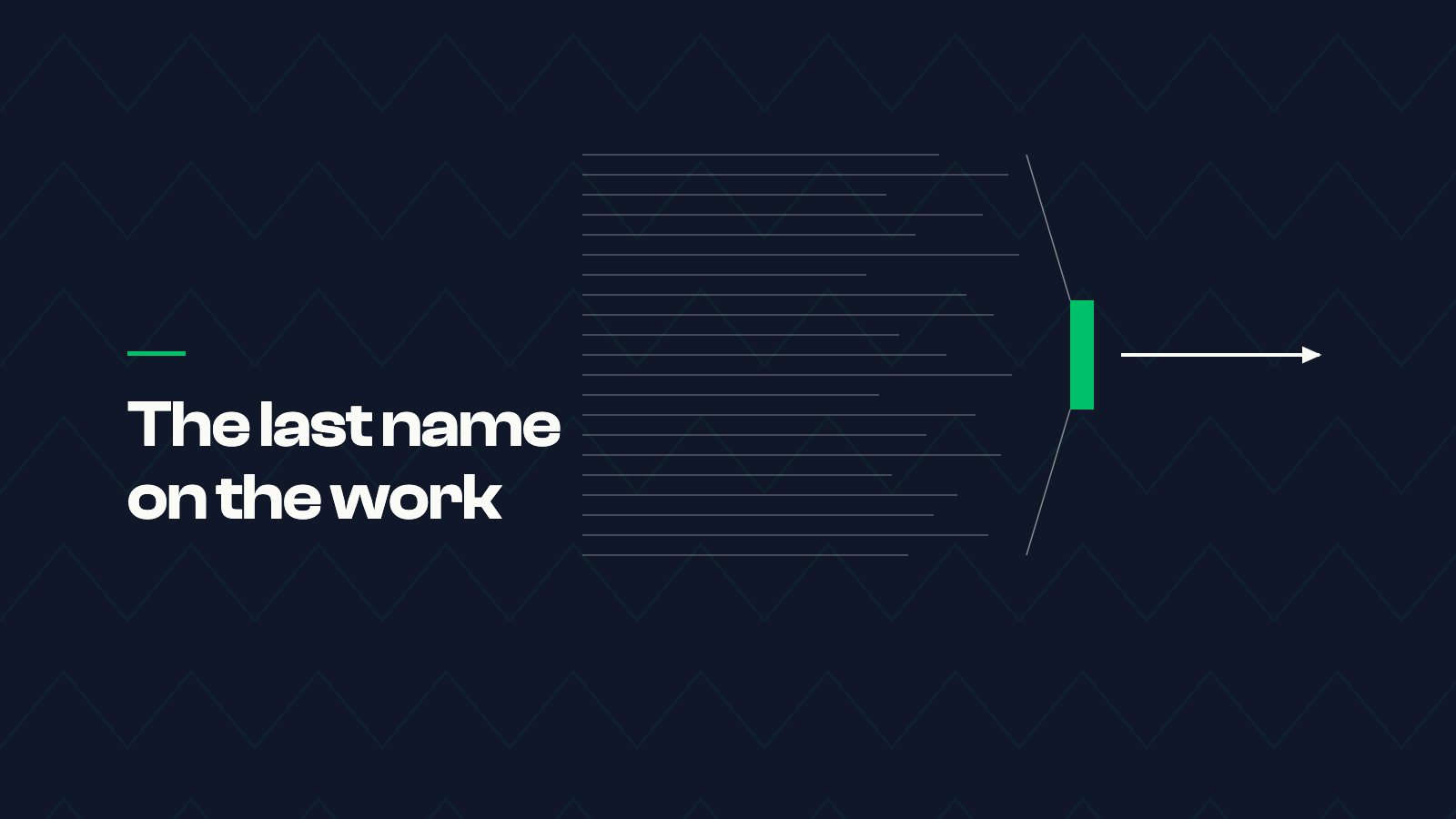
Where the person sits in the pipeline, and the test only they can apply.
Responsibility does not compress
If a hymn line is wrong, a congregation sings something false about God, and they sing it for years, because printed things acquire authority. Nobody can hold a model responsible for that. There is nobody to correct, and nobody whose reputation adjusts.
The same asymmetry shows up in every serious system I have built. If Fleet King miscalculates a fuel loss, somebody’s driver is accused of theft. If Scholaris prints a report card with the wrong total, a family sits in a head teacher’s office. If the electronic medical record I configured for a facility in Burundi bills a patient for a service they did not receive, that is a real amount of money out of a real household.
Software has always carried that weight. What has changed is that the distance between an instruction and a consequence has collapsed, and the volume of instructions has multiplied. In that situation responsibility becomes the scarcest thing in the room, because it cannot be generated, and it cannot be bought in bulk. Somebody signs. It is worth being clear-eyed about who.
Taste is compressed exposure
The word taste sounds decorative, so let me define it usefully. Taste is what you have left after a great deal of exposure that you can no longer account for in detail. I can tell within a line or two that an Acholi sentence was written by someone who does not speak it at home. I cannot fully explain how. That is not mysticism, it is thirty years of listening compressed into a reflex.
This is why I am not persuaded by the argument that judgement is the next thing to be automated. The models are trained on what has been written down. Acholi as it is actually spoken in Pader is mostly not written down anywhere, and the same is true of most of the world’s languages and most of the world’s working knowledge. As long as that remains true, there will be a class of decisions that only somebody with unrecorded exposure can make.
Trust is local, and it is earned in a room
The last part of the human position is the one that is hardest to argue with and easiest to forget.
I have spent time with a farmer-owned cooperative in Northern Uganda, and the most useful hour I ever spent on that project was listening to how an operator talks about acreage. He does not talk in acres the way the form wants him to. He talks in gardens and in days of work, and whether he can plough at all depends on how heavy the ground sits after rain. Any system that insists on the form’s vocabulary will get filled in with approximations, and every report built on it will be confidently wrong.
No model gets that hour. It cannot sit on a plastic chair under a mango tree and be told, in Acholi, that the question it is asking makes no sense. An engineer who can do that, and who can then go home and write the migration, is not competing with the model at all. They are holding the one end of the work the model cannot reach.
Where that leaves us
I think the honest position is neither of the two on offer. The machines are not toys and they are not replacements. They are instruments, and instruments have always changed who gets to make things. Sunflower means a hymnal in Acholi is now the work of one person with a laptop in Kampala instead of a committee with a grant, which is a real redistribution of power and I am a direct beneficiary of it.
But the instrument does not answer for the music. When somebody in Kitgum opens that app and sings a line I approved, the line is mine. That is the position, and I have come to think it is a better one than the position I imagined I was training for: not the fastest writer in the room, but the person willing to be the last name on the work.
Sources and further reading
Frequently asked questions
Can AI translation models replace human translators for African languages?
Not for anything where the result carries real consequences. A model like Sunbird AI's Sunflower can draft translations at a scale no person could match by hand, but it cannot judge whether a hymn's words fit the tune a congregation has sung for decades, or whether an older word still sounds reverent rather than simply outdated. The model drafts, and a person who speaks the language decides.
What is Sunbird AI's Sunflower model and how good is it at Ugandan languages?
Sunflower is an open-weight language model from Sunbird AI, a Ugandan research group, released in October 2025 in 14 billion and 32 billion parameter sizes. It was formally evaluated on 31 Ugandan languages, and its larger version produced the best average translation quality into English on 24 of those languages, ahead of both GPT-4o and Gemini 2.5 Pro. Acholi is among its stronger languages in both directions.
Why does human responsibility matter more, not less, as AI takes over more tasks?
Because responsibility cannot be generated or bought in bulk, and there is nobody to hold accountable when a model gets something wrong. If a translated hymn line is false, a congregation sings it for years, and no model answers for that. As AI closes the distance between an instruction and its consequence, and multiplies how many instructions get issued, the person who signs off on the result becomes the scarcest thing in the room.